How to send cash to a loved one in 2026?
Your mother lives alone in the countryside and needs 200 € before her pension transfer lands. Your student son lost his card and has three days left before the end of the month. You want to chip in on a family pot with cousins scattered across France and abroad. In every case, you have the money in cash, and you're looking for a way to get it to the right person fast, without paying a fortune in fees and without sending it through the post in an envelope. The problem is that most modern channels start from a bank account, not cash. And the solutions that still accept cash each have their own constraints, limits and variable fees.
Here are the options truly available today in France and Europe, what they really cost, and how to avoid the scams that have multiplied around this kind of transfer.

Why sending cash has become more complicated over a few years
Three shifts have made the topic less obvious than it used to be.
Anti-money laundering regulation first. Successive European directives, including the latest one in force since 2024, impose stronger controls on cash flows. In practice, some operations that happened without question ten years ago now require ID, a justification, or a monthly cap.
The gradual disappearance of cheques next. In France, cheque usage dropped by more than 70 % between 2010 and 2024 according to the Banque de France. Many shops and services no longer accept them, and this affects person-to-person transfers.
Finally, the fragmentation of solutions. Where there used to be two or three clear options (cheque, money order, transfer), there are now a dozen channels, each with its own fees, limits and delays. Hard to navigate without comparing.
The four questions to ask before choosing how to send the cash
Before choosing a method, four questions change everything.
How much you send. 50 € is not the same as 5 000 €. Above 1 000 € in cash, some solutions become tricky or require documentation.
Who you send to. Does the recipient have a bank account or a card with an IBAN? Do they live in France or abroad? Can they travel to pick up the money?
How often. A one-off transfer or recurring help. For recurring help, the IBAN remains the cheapest solution.
How fast. A few days are acceptable, or is it an emergency?
With these four answers in mind, here are the real options.
How to send a mandat cash via La Poste to a recipient without a bank account
Probably the best-known method to send cash to someone who has no account, or no account easily accessible.
The principle: you go to a post office with the cash and the recipient's identity. The money order is issued, and the recipient can collect it at another post office, usually the next day, with ID and the order number.
The advantages: no bank account required for either sender or recipient. Secure, since the money is paid against identification. Available across France.
The limits: a cap often set at 1 500 € per operation, variable fees by amount and destination, and physical presence required at the counter for sending and collecting. For international transfers, La Poste also offers an express or standard mandate depending on the country. Fees and delays vary by destination.
How to make a bank transfer after depositing cash at the branch
If the recipient has a bank account or a card with an IBAN, a transfer is the simplest and cheapest solution. You just need to deposit your cash on your own account first.
Cash deposit at the branch or at a dedicated automated machine is still possible at most banks, but with conditions. Some limit the deposit to 1 000 € per month without justification, and require a declaration above that. The Banque de France doesn't set a legal cap on cash deposits, but banks apply internal caps as part of their due diligence obligations.
Once the cash is on the account, the transfer to the recipient is instant in most banks (SEPA Instant Credit Transfer), or takes one working day for a standard transfer.
Advantages: low cost (often free for a SEPA transfer), traceability, speed.
Limits: requires a bank account or a card with an IBAN for the sender, and one for the recipient.
How to use a Neosurf voucher to send money to a loved one
Neosurf-type vouchers let you buy a value in cash at a tobacconist's, and pass the code to the recipient. The recipient uses it to top up a prepaid card or a compatible online service.
Advantages: instant cash purchase, no ID up to a certain threshold, available at more than 600 000 sales points worldwide.
Limits: the recipient must have a compatible account (prepaid card, online service, etc.). The voucher isn't directly convertible to cash by the recipient. The cap is limited, typically 250 € per voucher.
A useful solution to help out someone who has a prepaid card, or to make a digital cash gift. The cash recharge with Neosurf voucher onto a payment card with a dedicated IBAN has become one of the simplest channels to transfer cash to a loved one who travels or doesn't have easy access to an account.
Which international transfer solution when the recipient is abroad
Companies specialised in international money transfer accept cash at agencies and let the recipient pick up at a partner location abroad or in France.
Advantages: speed (often a few minutes), accessibility in countries where the banking system is underdeveloped.
Limits: high fees, often between 5 and 10 % of the amount for small sums, sometimes less competitive than other solutions for large amounts or well-connected destinations.
These services remain relevant for emergencies and difficult international transfers, less so for France-to-France when other options exist.
How to use a payment app to send money after a cash deposit
Person-to-person payment apps, and banks' instant transfer features, let you send money to a loved one in a few seconds. But they start from a bank account, not cash directly.
To go from cash to app: you have to first deposit the money on your bank account, then send via the app. The result is fast and free, but the first step (cash deposit) remains a constraint depending on the bank.
How to send cash onto a prepaid card with a dedicated IBAN
An option that has grown in recent years is to send money to a prepaid card with an IBAN, directly usable by the recipient.
The principle is simple. The recipient has a prepaid card with a dedicated IBAN. The sender can:
- Make a transfer from their bank account to that IBAN (if they already have the money on their account)
- Buy a top-up voucher in cash, and pass the code to the recipient who loads it on the card
- Make a cash deposit at a compatible partner point
With the prepaid card with payment account from Veritas, all three methods are available. Each holder has a dedicated IBAN, and top-ups can come from a bank transfer, a Neosurf voucher bought in cash, or a deposit through compatible channels. For recurring transfers to a loved one (dependent parent, student child, partner abroad), the solution is cheaper than classic money transfer services.
Useful feature: between two Veritas card holders, transfers are free and instant, provided both cards start with the same first four digits. A practical alternative to peer-to-peer payment apps. The broader question of a prepaid card with IBAN and no bank account opens onto the different channels available depending on the recipient's situation.
How to avoid scams and secure a cash transfer
Sending money to a loved one isn't a sensitive operation in itself, but a few precautions are worth it.
Always keep a record. Mandate receipt, voucher copy, transfer confirmation. If something goes wrong, this is the proof that counts.
Check the recipient's identity when required. A mandate collected by the wrong person is lost money.
Be wary of urgent requests. Many scams use emotional urgency to push for a fast transfer to a foreign account or a less traceable service. The Banque de France recommends always calling the relative on a known number before transferring.
Beyond 10 000 € in cash, international transfers must be declared to customs (Cerfa form). In mainland France, cash payments between individuals aren't capped, but traceability remains important for large amounts.
| Situation | Cheapest solution | Fastest solution | |
| Recipient with account or IBAN card, in France | SEPA transfer | SEPA Instant transfer | |
| Recipient without account, in France | Mandat cash La Poste | Top-up voucher | |
| Recipient with prepaid card and IBAN | Neosurf voucher in cash | SEPA Instant transfer to the IBAN | |
| Recipient abroad outside SEPA | International bank transfer | Specialised transfer service | |
| Recurring transfers to a loved one | Transfer to an IBAN card | SEPA Instant transfer |
What's the cheapest way to send 200 € to a relative in France?
If the recipient has an account or a card with an IBAN, a bank transfer is free. If not, the mandat cash via La Poste is secure but charged (a few euros). A top-up voucher is also possible if the recipient has a compatible prepaid card.
What's the fastest method for an emergency transfer?
For France, a SEPA Instant transfer lands in less than 10 seconds. For international, some specialised transfer services are just as fast, but more expensive.
Can you send money to someone without a valid ID document?
Hard. All traced solutions (mandate, transfer, transfer service) require identifying the recipient. Only a top-up voucher might bypass that, provided the recipient has a compatible service. For undocumented people or those in precarious situations, this is a real limit of the current system.
Should you declare a family cash gift to the tax authorities?
In France, manual gifts between relatives can be made without formality within certain thresholds. Above these limits, or for significant recurring gifts, a declaration to the tax authorities (form 2735) is required to benefit from tax allowances. Thresholds vary depending on the family link. It's worth consulting the official impots.gouv.fr website or a notary for significant operations.
Is there a real difference between "sending cash" and "sending money"?
Yes. "Sending cash" assumes you start from physical bills. That's what complicates things the most, because most modern channels (transfer, app, instant payment) need a banking starting point. Most of the time, the first step is to turn the cash into a balance on an account or a card, and only then send it.
Similar articles
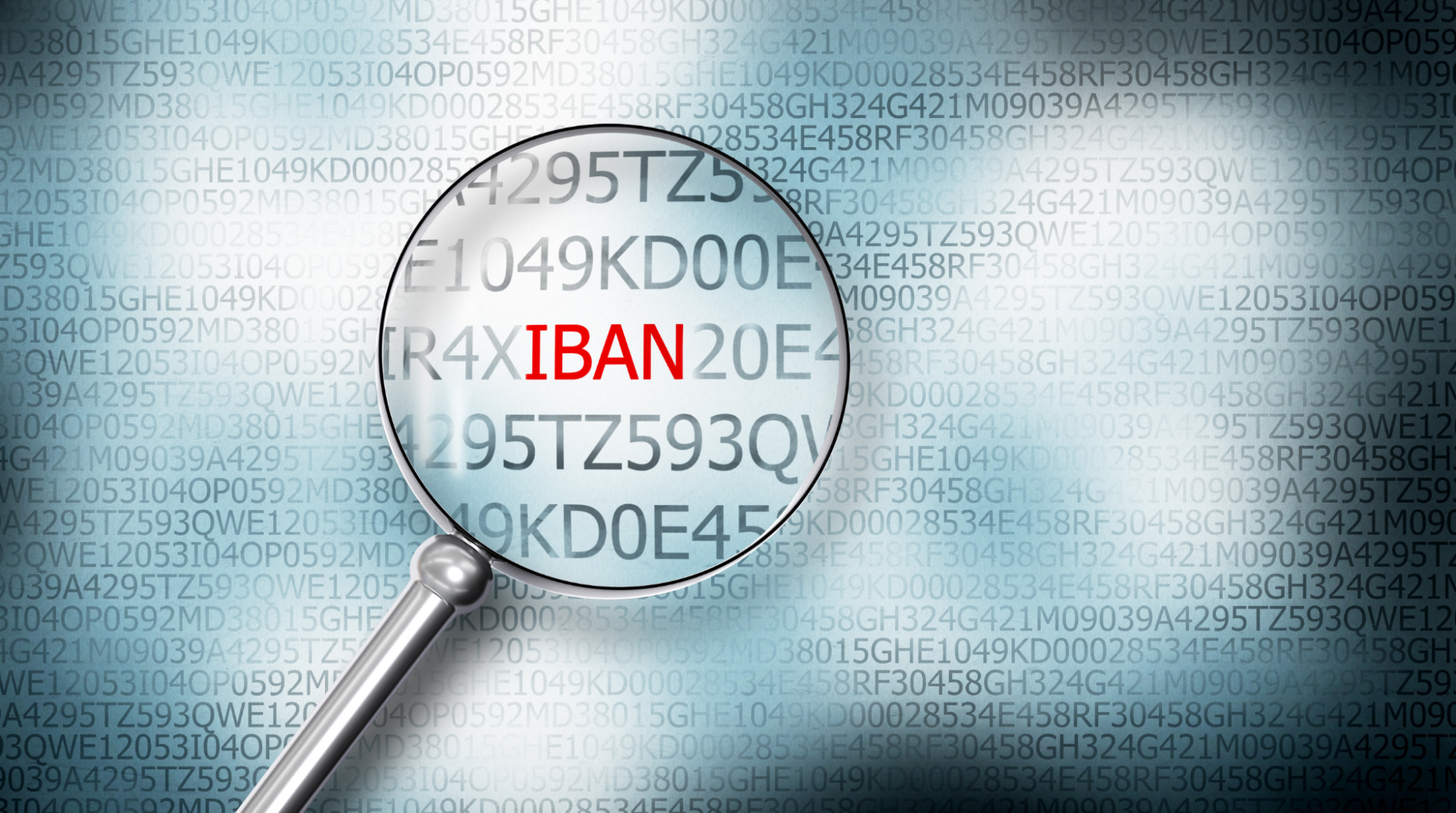
What is the difference between a RIB and an IBAN in France?

Does a truly free bank card with no account really exist?
Contact Us

Service & Support by
real humans, not bots
The information provided on this blog is presented for informational purposes only and has no contractual or legal value. Although we strive to ensure the accuracy, completeness and updating of the published content, it may contain errors, omissions or inaccuracies. Carte Veritas and the authors of the articles cannot be held responsible for decisions or actions taken based on the information contained in this blog. Any use of this information is made at your own risk and under your sole responsibility. We encourage you to consult a qualified professional or an expert for any important question or decision relating to the subjects discussed. In addition, the information presented on this site may be modified or updated without notice. By visiting this blog, you agree that Carte Veritas and its partners are released from any liability concerning losses, direct or indirect damages, or consequences arising from the use of the contents of this site, whether they are linked to errors, omissions or the interpretation of the information published.
 English
 Français
 Español
 Português
 Deutsch
 Nederlands
 Română
 Polski
 Italiano
 Suomi
Suomi
 Dansk
Dansk
 čeština
 Ελληνικά
 Svenska
 Nynorsk
 українська
 Pусский
 Latviešu
 Magyar
 Lietuvių